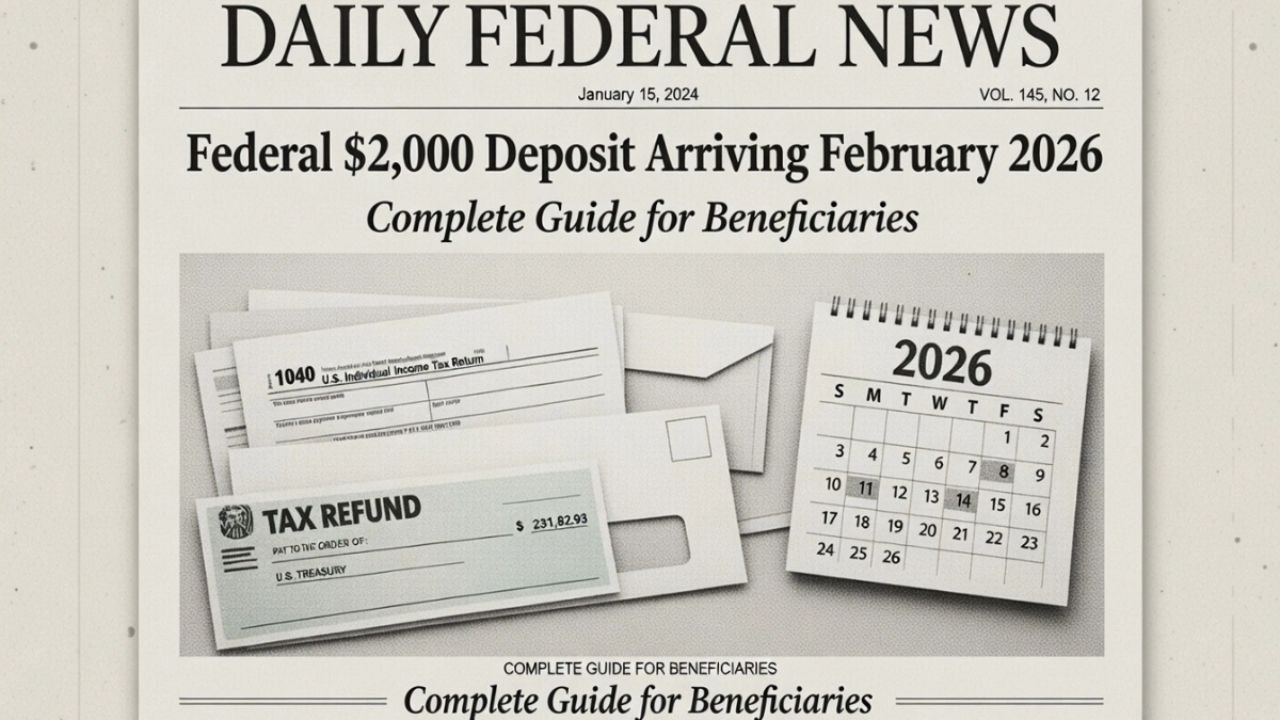
Speculation surrounding a potential $2,000 federal direct deposit in February 2026 has generated significant attention among taxpayers, retirees, and benefit recipients. In an environment shaped by rising living costs and economic uncertainty, even the possibility of a federal payment can influence household financial decisions.
Before making assumptions, however, it is essential to understand what has been officially confirmed, how federal payments are typically authorized, and what beneficiaries should realistically expect.
Is the $2,000 February 2026 Payment Official?

At this time, there has been no formal nationwide announcement confirming a new $2,000 stimulus-style federal payment scheduled for February 2026.
Any large-scale federal distribution requires:
- Congressional legislation
- Executive approval
- Treasury allocation
- Administrative implementation through the Internal Revenue Service
Without enacted legislation and an official rollout plan, automatic deposits cannot legally proceed.

When prior stimulus programs were approved, details were released publicly through verified government platforms, press briefings, and IRS guidance. The absence of such confirmation should encourage careful evaluation of circulating claims.
Why Are People Expecting a Deposit?
Several factors are contributing to heightened expectations:
Tax Refund Season Overlap
February marks peak processing for federal income tax refunds. Refunds often reach or exceed $2,000 depending on credits and withholdings, which can be mistaken for a new federal relief payment.
Viral Online Headlines

Financial topics tend to gain traction quickly online. Headlines referencing “approved deposits” may lack direct citation of enacted legislation.
Historical Precedent
Past economic relief packages created a lasting expectation that federal stimulus checks may reappear during periods of economic strain. However, stimulus programs are not recurring benefits unless reauthorized by Congress.
Understanding this distinction is critical for responsible financial planning.
How Federal Direct Deposits Typically Work
If a legitimate $2,000 payment were enacted, distribution would follow established Treasury procedures.
Direct Deposit
Taxpayers with verified banking information on file with the IRS would receive funds first. Electronic transfers are faster, more secure, and less costly to administer.
Paper Checks
Recipients without direct deposit details would receive mailed checks, which typically arrive later.
Prepaid Debit Cards
In some cases, prepaid government-issued debit cards are mailed as an alternative delivery method.
Electronic payments are prioritized because they streamline distribution and reduce mailing delays.
Who Would Likely Qualify If Approved?
While no confirmed program currently exists, historical federal payment models suggest eligibility would likely depend on:
Income Thresholds
Adjusted Gross Income (AGI) limits typically determine qualification, with phaseouts for higher earners.
Tax Filing Status
Individuals who have filed recent federal returns are generally processed first.
Citizenship and Identification
Valid Social Security numbers and verified identification are standard requirements.
Dependent Status
Some programs include additional payments for qualifying dependents, while others exclude dependents claimed on another return.
Until legislation is passed, however, these remain hypothetical criteria.
Why Direct Deposit Recipients Are Processed First
Electronic transfers offer administrative efficiency and security. Once eligibility is verified, the deposit is sent automatically to the bank account listed on the most recent tax return.
However, delays may occur if:
- Routing numbers are incorrect
- Bank accounts are closed
- Names do not match IRS records
- Returns are under review
Ensuring updated and accurate banking information is essential for uninterrupted processing in any federal payment scenario.
Verification Reviews That Could Impact Timing
Before releasing large-scale payments, federal agencies conduct multiple checks, including:
- Income verification
- Identity confirmation
- Fraud prevention screening
- Tax filing validation
If discrepancies are identified, payments may be paused pending resolution. Responding promptly to official notices reduces the risk of prolonged delays.
Could This Simply Be a Tax Refund?
For many taxpayers, February deposits may represent standard federal refunds rather than new stimulus funds.
Refund amounts depend on:
- Earned Income Tax Credit eligibility
- Child Tax Credit claims
- Withholding levels
- Filing status
- Deductions and adjustments
If you recently filed your 2025 return, a $2,000 deposit could reflect your refund calculation rather than a separate relief initiative.
Tracking your refund through official IRS tools remains the most reliable verification method.
How to Protect Yourself From Misinformation
Whenever discussions of federal deposits gain traction, fraudulent schemes often increase.
Protect yourself by remembering:
- The IRS does not request sensitive information via text or social media.
- Official government websites end in “.gov.”
- You should never pay a fee to receive a federal payment.
- Avoid clicking on unverified registration links.
Financial awareness is your strongest safeguard.
Practical Steps to Take Now
Regardless of stimulus speculation, these actions strengthen your financial readiness:
- File federal tax returns accurately and on time.
- Confirm direct deposit information is current.
- Review IRS account information periodically.
- Monitor official federal announcements rather than social media posts.
Preparedness ensures smooth processing should any legitimate program be approved.
Final Thoughts
At present, there is no officially confirmed $2,000 federal payment scheduled for February 2026. Any such initiative would require formal congressional authorization and transparent implementation through the Internal Revenue Service and the U.S. Treasury.
While the possibility of additional financial relief always generates interest, responsible financial planning depends on verified information — not trending headlines.
Stay informed, rely on official sources, and ensure your tax and banking details remain accurate. Financial clarity remains one of the most valuable assets in today’s rapidly evolving economic landscape.
Disclaimer: Payment approval, eligibility rules, timelines, and verification requirements are determined exclusively by federal legislation and official government announcements. Individuals should consult verified IRS communications or qualified financial professionals for the most accurate and up-to-date guidance.